
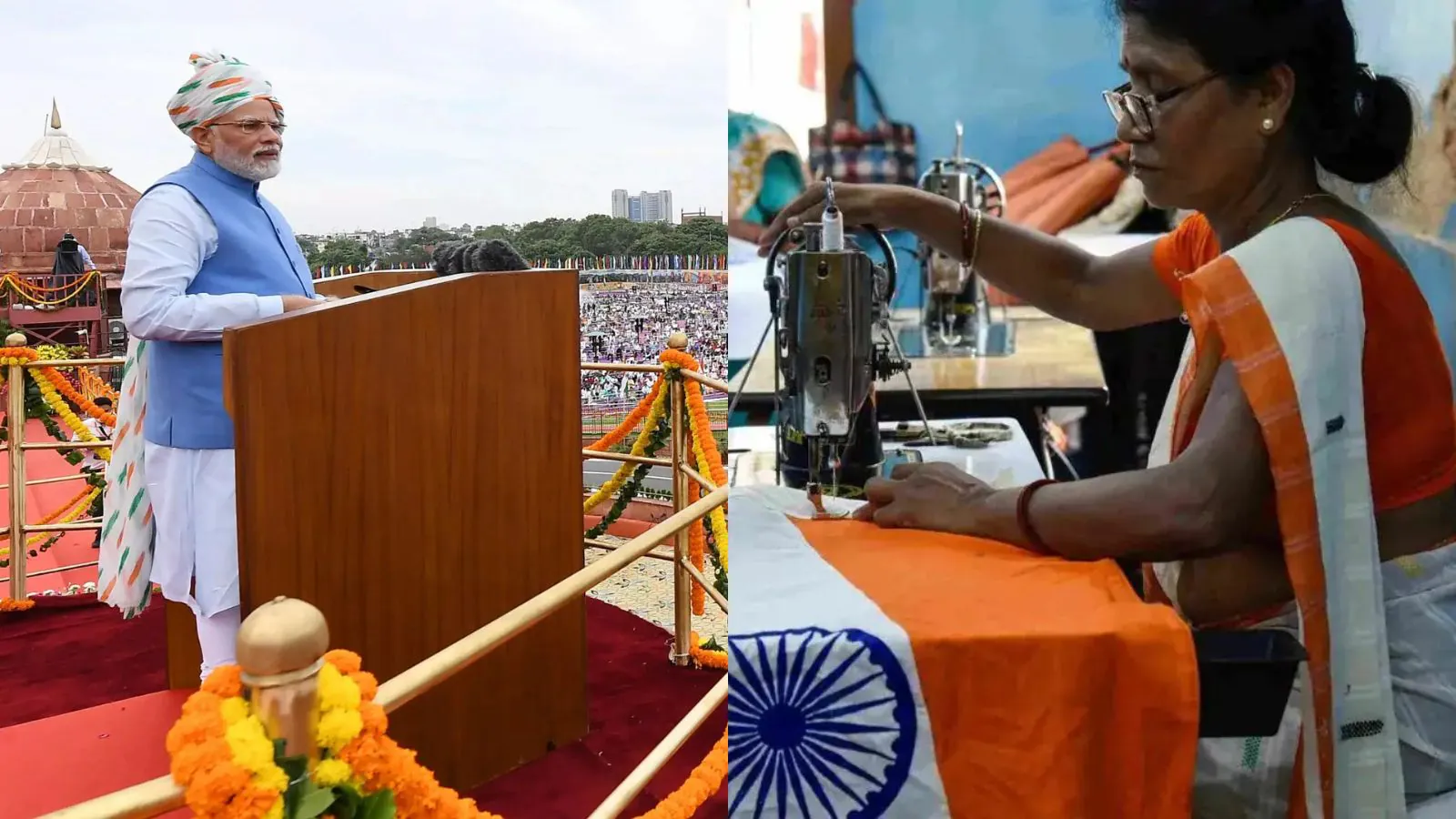
As India prepares to celebrate Independence Day 2026, millions of Tricolours will proudly wave across the country. From schools and government offices to military establishments and public celebrations, the Indian National Flag remains the ultimate symbol of unity and patriotism.
But did you know that every official Indian National Flag—including the one unfurled at Delhi’s iconic Red Fort—comes from just one small village in Karnataka?
Here’s the remarkable story behind the birthplace of India’s official Tricolour.
The Small Karnataka Village Behind India’s Official Tricolour
Near Hubballi in Karnataka lies Bengeri, a quiet village that holds a special place in India’s history.
Every officially recognised Indian National Flag begins its journey here before reaching important government buildings, military establishments, and national celebrations across the country.
Despite its modest size, Bengeri plays a vital role in preserving one of India’s most respected national symbols.
India’s Only Authorised Flag Manufacturing Unit
Bengeri is home to the Karnataka Khadi Gramodyoga Samyukta Sangha (KKGSS), the country’s authorised manufacturer of the official Indian National Flag.
Every flag produced here follows strict quality standards laid down by the Bureau of Indian Standards (BIS) and complies with the Flag Code of India.
This ensures that every official Tricolour meets the exact specifications required by law.
Why Official Indian Flags Are Made Only From Khadi
Unlike decorative flags sold for general celebrations, every official National Flag must be made from hand-spun and handwoven khadi.
Khadi represents Mahatma Gandhi’s vision of self-reliance and India’s freedom movement.
The use of khadi also preserves traditional weaving techniques while maintaining the authenticity of the National Flag.
Every Tricolour Is Made With Incredible Precision
Making the official Indian flag is a detailed and carefully monitored process.
The khadi fabric is dyed in the approved saffron, white, and green colours before being stitched together.
The navy-blue Ashoka Chakra, consisting of exactly 24 equally spaced spokes, is printed with extreme precision.
Each flag also undergoes multiple inspections before it receives final approval.
A Legacy Connected To India’s Freedom Movement
The Karnataka Khadi Gramodyoga Samyukta Sangha was established in 1957 by freedom fighter Venkatesh Magadi.
Its objective was to promote khadi, generate employment for rural artisans, and preserve India’s traditional craftsmanship.
In 2006, the organisation received official authorisation to manufacture the Indian National Flag, becoming an important part of the country’s heritage.
Women Artisans Play A Major Role
A significant portion of the work at the Bengeri unit is carried out by skilled women artisans.
From stitching the fabric to printing the Ashoka Chakra and inspecting every finished flag, their dedication ensures that each Tricolour reflects dignity, precision, and national pride.
Their craftsmanship has become an essential part of India’s Independence Day celebrations every year.
Nine Official Sizes For Different Uses
The manufacturing unit produces the National Flag in nine approved sizes.
These range from small desk flags used during official events to giant Tricolours displayed on important government buildings.
Regardless of size, every flag follows the official 3:2 proportion and must pass strict quality checks before leaving the facility.
Busiest Time Before Independence Day
As August 15 approaches, demand for the Indian National Flag rises sharply across the country.
Workers at Bengeri often work extended hours to ensure that official flags reach schools, government institutions, defence establishments, and the Red Fort in time for Independence Day celebrations.
Their efforts help ensure that every official ceremony across India proudly displays a correctly manufactured Tricolour.
Why This Village Is So Important
Although Bengeri is a small village, it has earned national recognition for preserving one of India’s most respected traditions.
Every official National Flag represents the hard work of skilled artisans, strict quality standards, and the spirit of the freedom movement.
For millions of Indians, the Tricolour is more than a flag—it is a symbol of sacrifice, unity, and national pride.
Conclusion
Every Independence Day, the Indian National Flag becomes the centre of celebrations across the country. Few people realise that every official Tricolour starts its journey in the small village of Bengeri in Karnataka.
The dedication of its artisans, adherence to strict national standards, and commitment to preserving India’s heritage make Bengeri an important yet often overlooked part of the nation’s story.
As the country celebrates Independence Day 2026, this village quietly continues its proud responsibility of crafting the flag that unites over a billion Indians.
Frequently Asked Questions (FAQs)
Which village makes every official Indian National Flag?
Bengeri, near Hubballi in Karnataka, is home to India’s authorised National Flag manufacturing unit.
Who manufactures the official Indian National Flag?
The Karnataka Khadi Gramodyoga Samyukta Sangha (KKGSS) is the authorised manufacturer.
Why are official Indian flags made from khadi?
The Flag Code requires official National Flags to be made from hand-spun and handwoven khadi, reflecting India’s heritage and Gandhian ideals.
How many official sizes of the National Flag are produced?
KKGSS manufactures the National Flag in nine approved sizes for different official purposes.
Why is Bengeri important before Independence Day?
The village works around the clock before August 15 to produce official National Flags for government offices, schools, defence establishments, and the Red Fort.