
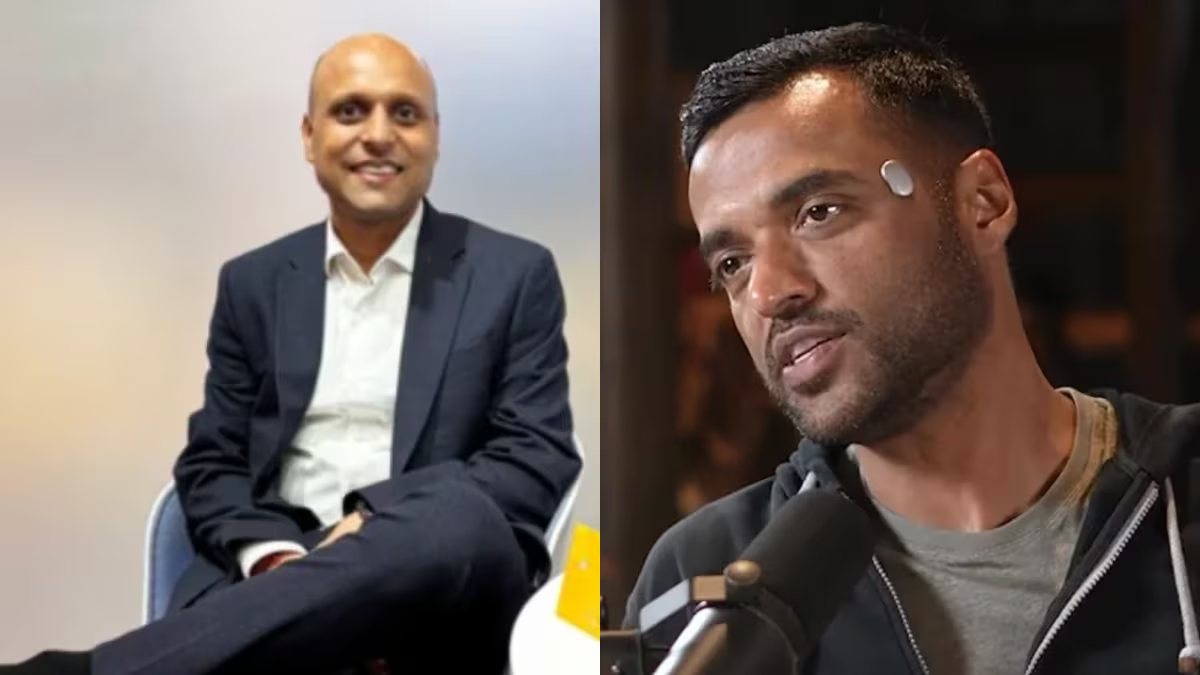
A Delhi-based startup founder was reportedly ready to spend nearly ₹85,000 on Deepinder Goyal’s new AI-powered wearable device, Temple. However, one statement from the Zomato founder changed his mind. The entrepreneur decided not to purchase the device after Goyal said Temple was not made for India but for the global market. His decision has now sparked another discussion online, with many people debating whether Indian customers are being overlooked despite the country’s growing demand for premium technology products.
The incident has attracted attention because the founder was not initially worried about Temple’s high price or the criticism surrounding the product. Instead, it was the company’s message about its target market that made him reconsider his decision.
Who Is the Delhi Entrepreneur Who Changed His Mind?
The entrepreneur at the centre of this discussion is Ankit Aggarwal, founder and CEO of Unstop, a talent engagement platform.
Aggarwal shared his thoughts in a LinkedIn post, explaining that he was seriously considering purchasing Temple. According to him, the price and the negative reactions surrounding the product were not major concerns.
However, his opinion changed after reading Deepinder Goyal’s Diwali message, in which the entrepreneur explained that Temple was designed for the global market rather than specifically for Indian customers.
Aggarwal said he would respect that positioning and decided against buying or endorsing the product.
His post quickly attracted attention because it raised an interesting question: If Indian customers are willing to spend money on premium technology, why should they feel that a product from an Indian company is not meant for them?
What Did Deepinder Goyal Say About Temple Being Made for India?
Deepinder Goyal, the founder of Zomato’s parent company Eternal, recently introduced Temple, an AI-powered fitness and wellness wearable.
The product has attracted considerable attention because of its technology, pricing and claims about health-related measurements.
However, the discussion became more intense after Goyal addressed criticism in a post on X during Diwali.
He explained that Temple was being developed for the international market and that the company expected India to contribute less than one per cent of its total sales.
Goyal also said that customers should not support the product simply because it comes from an Indian startup. According to him, the company wants to compete internationally and attract customers who genuinely believe in its technology.
He further defended the product’s pricing, explaining that the development work behind Temple was reflected in its price.
These comments became a major talking point, with some social media users questioning why an Indian company would not actively target the Indian market.
Why Did Ankit Aggarwal Decide Not to Buy Temple?
Aggarwal made it clear that his decision was not necessarily about the quality of Temple or its technology.
He said he assumed the device could be a good product, just like other fitness trackers. However, he wanted to understand how it would stand apart from existing products in the market.
He also pointed out that Indian consumers already purchase expensive fitness and technology products.
For example, people in India spend significant amounts on premium devices such as the Apple Watch Ultra and subscriptions to wearable fitness platforms like Whoop.
According to Aggarwal, the main issue was not whether Indian customers could afford Temple. Instead, it was about how the company communicated its relationship with the Indian market.
He also raised questions about transparency when people with financial interests in a product promote it. In his view, anyone promoting a product while holding a stake in the company should clearly disclose that connection.
Finally, Aggarwal said he would take Goyal’s statement at face value. If Temple was not made for India, he would not purchase it or endorse it.
Temple’s ₹85,000 Price Tag Becomes a Talking Point
One of the biggest reasons Temple has attracted public attention is its reported price of approximately ₹85,000.
For many Indian families, this is a considerable amount of money. At the same time, India has a growing market for premium smartphones, smartwatches, fitness trackers and other personal technology products.
Many consumers are willing to spend more when they believe a product offers something valuable and different.
This is why Temple’s pricing has generated so much discussion.
Some people believe the product should first establish its value through real-world reviews and reliable evidence. Others argue that innovative technology should not be judged only by its price.
Ultimately, customers will want to know what Temple offers, how accurately it measures the information it promises to track and whether those features justify the investment.
Why Are People Comparing Temple With Apple and Whoop?
The comparison with Apple and Whoop has become an important part of this discussion.
Both brands have attracted customers interested in premium technology and fitness tracking. Their products show that Indian consumers are not necessarily limited to affordable devices.
People who purchase expensive smartphones, smartwatches and fitness subscriptions often look beyond the price tag. They consider the product’s features, performance, reliability and overall experience.
Aggarwal’s argument is that Indian customers should be treated as potential buyers of premium products rather than being excluded from a company’s target market.
However, there is another side to the discussion. A company developing a specialised product for international customers may have different pricing, distribution and marketing strategies.
The important question is whether the company can explain its strategy without making potential customers feel unwanted.
Deepinder Goyal Says Temple Is a Fitness and AI Device, Not a Medical Product
Apart from pricing and its target audience, Temple has also faced questions about its scientific claims.
Goyal clarified that Temple should be understood as a fitness and AI device rather than a medical device.
He stated that the product has not been proven to diagnose or prevent diseases and does not replace the need to consult a doctor.
He also discussed the scientific evidence behind its features, explaining that people could wait for stronger research, including peer-reviewed studies, before deciding whether to purchase it.
This is an important point for Indian consumers. Technology products that discuss fitness, brain-related measurements or wellness should be judged carefully.
Customers should understand exactly what a device measures, how its technology works and what its limitations are before spending a large amount of money.
Social Media Debate Raises Questions About Indian Consumers
The discussion surrounding Temple has now become bigger than one wearable device.
Several social media users have questioned Goyal’s comments, arguing that India has a large audience for premium technology.
Others believe a company should be free to decide which markets it wants to target and should not be expected to receive support simply because it was founded in India.
Both arguments highlight an important reality of today’s startup ecosystem.
Indian companies are increasingly building products for international customers. However, Indian consumers also expect these companies to recognise the market that helped create their success.
For a product priced at ₹85,000, clear communication, transparency and customer confidence can be just as important as technology.
Will Temple Win Over Indian Customers in the Future?
It remains to be seen how Temple performs once more customers begin using the device and sharing their experiences.
Its long-term success will depend on the actual value it provides, the quality of its technology and the evidence supporting its features.
Ankit Aggarwal’s decision has added another interesting chapter to the debate. He was reportedly ready to purchase the device despite its premium price, but changed his mind after hearing how its founder described its target audience.
For now, the bigger question is not simply whether Temple is worth ₹85,000.
It is whether Indian consumers will feel equally welcomed by a premium technology product created by an Indian entrepreneur.
The final answer will likely come from customers themselves, as real reviews, product performance and market demand become clearer.