
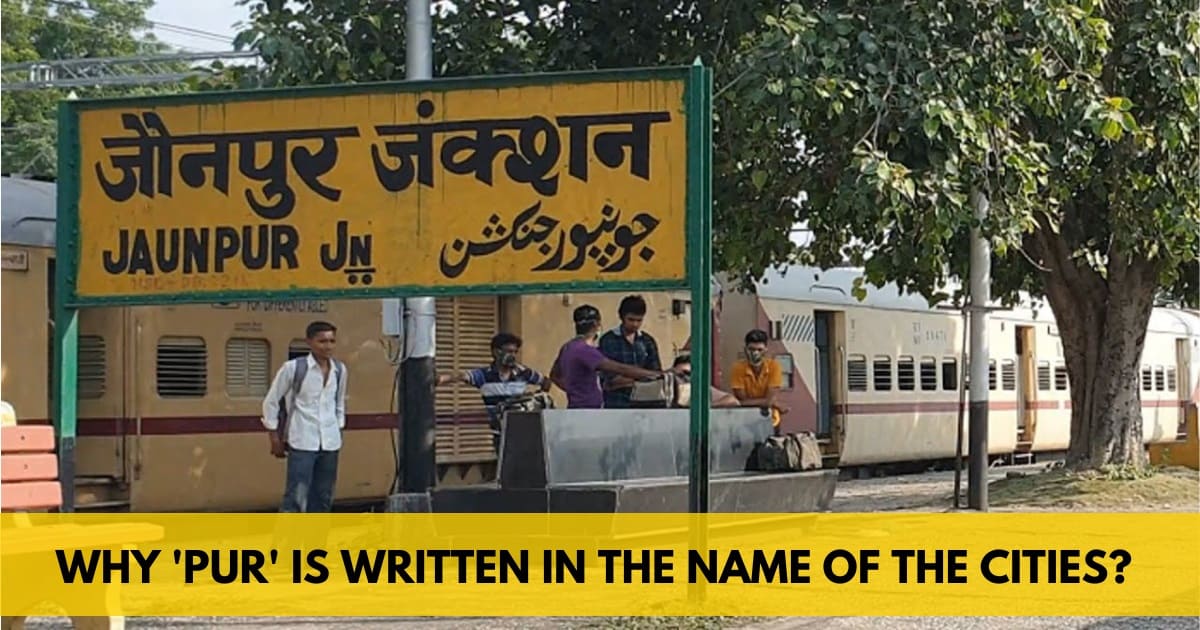
Have you ever wondered why so many Indian cities have names ending with “Pur”?
From Nagpur, Jaipur and Kanpur to Raipur, Udaipur, Rampur, Gorakhpur and Sitapur, the word “Pur” appears in the names of several cities and villages across India.
This naming tradition has deep historical and linguistic roots and goes back centuries.
What Does ‘Pur’ Mean?
“Pur” is an ancient Sanskrit word associated with a city or fort. The word is also mentioned in the Rigveda.
In earlier times, kings and rulers often used names connected with themselves, their kingdoms or important places while naming settlements.
Over time, “Pur” became a commonly used part of place names.
How Was ‘Pur’ Added To City Names?
In many cases, a person’s name or another identifying word was combined with “Pur” to create the name of a settlement.
One well-known example is Jaipur.
The city was built by Raja Jai Singh, and the name Jaipur can be understood as Jai + Pur.
This reflects the traditional practice of combining a name with “Pur” while naming a city.
Why Did Kings Use ‘Pur’ In City Names?
Ancient kingdoms had several important settlements, forts and centres of administration.
Since “Pur” was associated with a city or fortified settlement, rulers used the term while naming places connected to their kingdoms.
As generations passed, many of these names continued to be used and became an important part of India’s geographical and historical identity.
Examples Of Indian Cities Ending With ‘Pur’
There are numerous examples across India and the wider region.
Some familiar names include:
- Nagpur
- Jaipur
- Kanpur
- Raipur
- Udaipur
- Rampur
- Gorakhpur
- Sitapur
- Udhampur
- Lakhanpur
- Janakpur
While the history behind individual city names can differ, the use of “Pur” reflects an old linguistic and cultural tradition.
The Historical Importance Of Place Names
Indian place names often preserve pieces of the country’s history.
Names can reflect the influence of rulers, languages, cultures and historical events. In this way, a city name is more than just an identity—it can also provide clues about the place’s past.
The continued presence of “Pur” in many names shows how older linguistic traditions have survived over centuries.
Is ‘Pur’ Used Outside India Too?
The term is not limited to India.
The source notes that forms of the word are also found in place names in countries such as Afghanistan and Iran, reflecting the wider historical and linguistic connections of the region.
Conclusion
The next time you see a city name ending in “Pur,” it may carry a piece of India’s ancient linguistic and historical heritage.
From Jaipur and Nagpur to Kanpur and Udaipur, the suffix has remained part of many place names for centuries. Its connection with the idea of a city or fort helps explain why it became such a familiar part of Indian geography.
Frequently Asked Questions
What is the meaning of ‘Pur’ in Indian city names?
“Pur” is an ancient Sanskrit word associated with a city or fort and is mentioned in the Rigveda.
Why do many Indian cities end with ‘Pur’?
The suffix was traditionally used while naming cities and settlements, often along with a person’s name or another identifying word.
What is an example of a city named using ‘Pur’?
Jaipur is one example. It is formed from Jai + Pur and is associated with Raja Jai Singh, who built the city.
Which Indian cities have ‘Pur’ in their names?
Examples include Jaipur, Nagpur, Kanpur, Raipur, Udaipur, Rampur, Gorakhpur, Sitapur and Udhampur.
Is ‘Pur’ used only in India?
No. The source also notes the use of the term in place names in Afghanistan and Iran.