
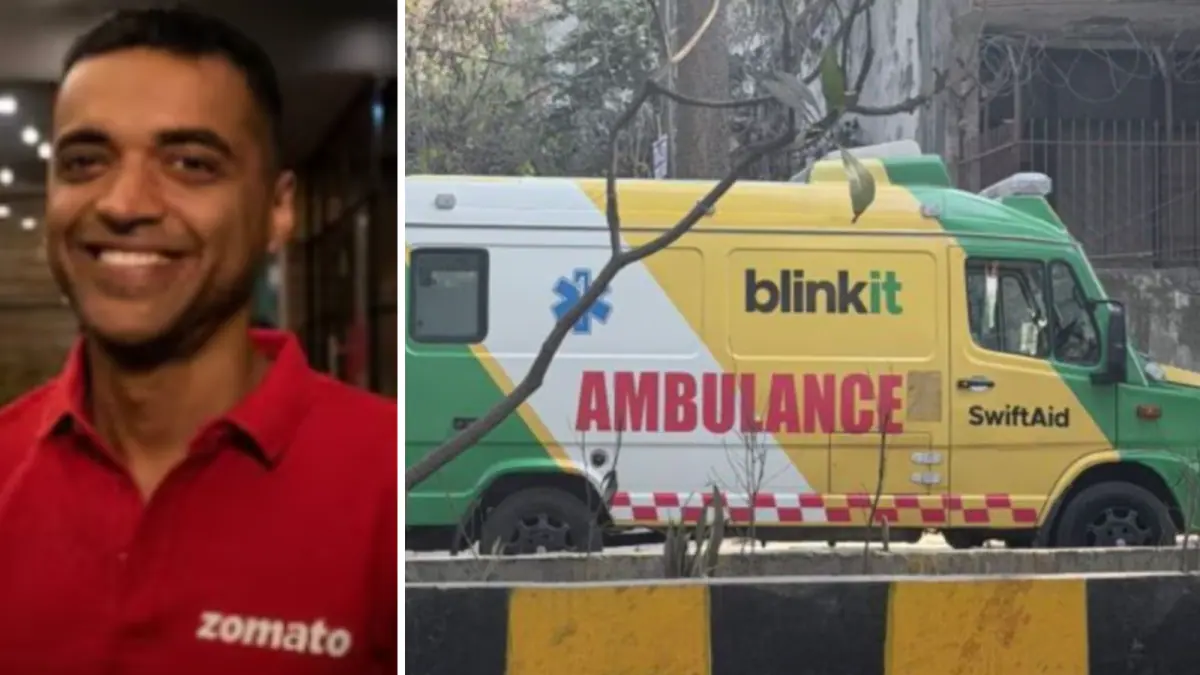
Blinkit Ambulance Service To Charge ₹2,500 For Non-Emergency Rides, Deepinder Goyal Explains Why
Blinkit’s ambulance service, which attracted attention for offering free emergency medical transportation, is introducing an important change. The company will now charge ₹2,500 for non-emergency ambulance trips, while genuine medical emergency transfers will continue to remain free. Eternal founder Deepinder Goyal announced the decision, explaining that an increasing number of people were booking ambulances for routine hospital visits, regular check-ups and hospital-to-home transfers. According to him, these bookings were keeping fully equipped emergency ambulances occupied when they could be needed by someone facing a life-threatening situation. The decision has started a discussion online about free healthcare services, responsible usage and the importance of keeping emergency vehicles available for patients who need immediate help.
Why Is Blinkit Introducing A ₹2,500 Ambulance Charge?
Blinkit’s decision is mainly aimed at reducing the use of emergency ambulances for routine medical transportation.
When the service was introduced, the company wanted to make emergency transportation more accessible to people who needed urgent medical attention.
However, Deepinder Goyal noticed a change in booking patterns. A growing number of people were using the free service for purposes such as regular hospital appointments, medical check-ups and taking patients home after discharge.
These journeys may be important for patients, but they do not always require a fully equipped emergency ambulance.
According to Goyal, when an ambulance and its trained staff are occupied with a routine journey, they cannot immediately respond to another patient who may be experiencing a heart attack, serious accident or another critical medical condition.
The company hopes the new charge will discourage unnecessary bookings and keep more ambulances available for genuine emergencies.
Emergency Ambulance Services Will Remain Free
One important point in the announcement is that Blinkit is not ending its free ambulance service.
Patients requiring emergency transportation will continue to receive the service without paying any charges.
The revised pricing structure is as follows:
- Emergency transfers: Free of cost.
- Non-emergency transfers: ₹2,500, payable after the trip.
The company says the new fee is broadly comparable with the rates charged by private ambulance operators.
This distinction is important because people sometimes need immediate medical assistance and may not have the time or financial ability to arrange transportation during a crisis.
By keeping emergency transfers free, Blinkit wants to ensure that its service continues to support patients who need urgent help.
Deepinder Goyal Shares Important Numbers About The Service
While explaining the decision, Deepinder Goyal shared details about the number of people who have used Blinkit’s ambulance service.
He said that over the last two years, the service had handled approximately 42,000 cases, including around 20,000 emergency cases.
The company had not charged users for these services during that period.
Goyal said the intention was to continue providing free transportation for emergency cases while making changes to reduce the growing number of non-emergency bookings.
The numbers also show that the ambulance service has handled a significant number of requests since its launch.
For the company, the challenge is now to maintain availability while expanding operations and ensuring that trained medical staff are available whenever required.
Where Will The ₹2,500 Collected From Non-Emergency Rides Go?
Another important detail shared by Goyal is how the money collected through the new charge will be used.
According to him, the revenue from non-emergency transfers will go to the Eternal Foundation, which operates the ambulance service.
The money will be used to support the expansion of the ambulance network.
This means the new charge is not being presented simply as a way to earn money from passengers. The company says it wants to use the funds to strengthen the service and make it available to more people.
Expanding an ambulance network requires investment in vehicles, medical equipment, maintenance, trained staff and operational support.
These expenses make it difficult to operate a large emergency transportation network without a sustainable financial plan.
How Does Blinkit’s 10-Minute Ambulance Service Work?
Blinkit launched its ambulance service in Gurugram in January 2025 with an initial fleet of five ambulances.
The idea was to use its technology and local operational network to help people access emergency medical transportation quickly.
Unlike ordinary vehicles, these ambulances are equipped with medical facilities designed to support patients during transportation.
The equipment includes oxygen cylinders, stretchers, vital-sign monitoring devices, automated external defibrillators and essential medicines.
The service also includes trained paramedics who can provide assistance during the journey. Doctors can offer guidance remotely when required.
People can request an ambulance through the Blinkit app in areas where the service is available.
However, the actual response time can depend on traffic, road conditions and ambulance availability.
Why Is There A Shortage Of Trained Paramedics?
Deepinder Goyal also highlighted an important challenge in expanding ambulance services across India.
According to him, finding trained and empathetic paramedics is one of the biggest difficulties.
An ambulance is not simply a vehicle that transports a patient from one location to another.
During emergencies, trained staff may need to monitor vital signs, provide oxygen, assist with patient movement and respond to changing medical conditions.
They must also communicate calmly with patients and family members during stressful situations.
This requires proper training and practical experience.
Goyal said the company’s training academy is expanding to prepare more staff while maintaining service quality.
The availability of skilled medical professionals will play an important role in deciding how quickly Blinkit can expand its ambulance network.
Blinkit Plans To Expand Ambulance Services Across Major Indian Cities
At present, Blinkit’s ambulance service is available in Gurugram and several parts of Delhi, Noida, Ghaziabad and Faridabad, according to its official service information.
The company has bigger plans for the coming years.
Goyal said the team aims to bring Blinkit Ambulance to all major Indian cities over the next two to four years.
If the expansion happens as planned, more people could get access to app-based emergency transportation.
However, expanding into different cities will require more than purchasing ambulances.
Companies will need trained staff, suitable medical equipment, local hospital coordination and reliable operations to make such services effective.
Traffic conditions and road infrastructure will also influence how quickly ambulances can reach patients.
Why Is This Decision Important For Indian Families?
Medical emergencies can happen without warning.
A person may suddenly experience chest pain, breathing difficulties, a serious fall or an accident. In such situations, getting medical assistance quickly can make a major difference.
Indian families often struggle to arrange suitable transportation during emergencies, especially late at night or in unfamiliar locations.
App-based ambulance services can provide another option for accessing emergency transportation.
However, emergency ambulances should not become a replacement for ordinary hospital transport.
For example, a patient who has completed treatment and is returning home may need a regular patient transport vehicle rather than an emergency ambulance with paramedics and specialised equipment.
Similarly, someone attending a routine medical appointment may be able to use a private vehicle or another suitable transport option.
Using the right transportation for each situation can help ensure that emergency resources remain available for people who genuinely need them.
What Should People Know Before Booking A Blinkit Ambulance?
People should understand the difference between emergency and non-emergency transportation before requesting an ambulance.
A serious accident, suspected heart attack, severe breathing difficulty or another life-threatening condition requires urgent medical attention.
Routine check-ups, planned hospital visits and many hospital-to-home transfers are generally non-emergency journeys.
The new ₹2,500 charge applies to non-emergency transfers under the announced pricing change, while emergency transfers remain free.
Users should check the latest service availability and booking information in the Blinkit app.
In a serious emergency, people should not delay seeking medical help while trying to compare transport prices. They can also contact India’s emergency response number 112 when immediate assistance is required.
A Change Aimed At Keeping Ambulances Available For Emergencies
Blinkit’s decision to introduce a ₹2,500 fee for non-emergency ambulance trips has started an important conversation about the responsible use of emergency services.
While free transportation is helpful, a fully equipped ambulance and trained paramedics are limited resources.
If these resources are occupied with routine journeys, someone facing a serious medical emergency may have to wait longer for help.
By keeping emergency transfers free and charging for non-emergency trips, Blinkit hopes to balance accessibility with availability.
The bigger challenge will be expanding the service without compromising the quality of medical support.
As the company prepares to enter more Indian cities, its ability to maintain trained staff and reliable ambulance operations will be important.
For now, the message from Deepinder Goyal is clear: emergency ambulances should remain available for the people who need them most.