
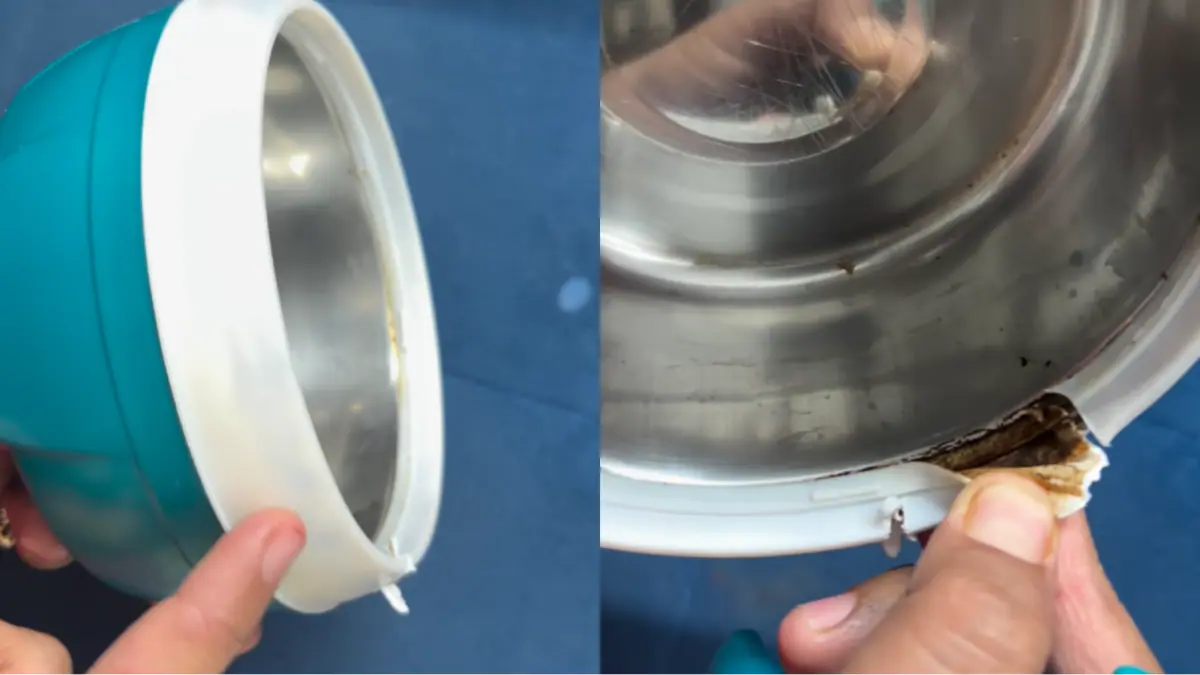
A woman’s attempt to investigate a steel lunchbox bought online has sparked a discussion about food safety, product quality and the materials used in everyday kitchen items. After noticing black marks around the plastic rim of the lunchbox, she decided to cut it open to see what was hidden inside. What she discovered raised concerns about hygiene, while social media users offered a different explanation, suggesting that the black substance could be insulation material inside the box. The incident has also prompted a wider conversation about whether consumers should pay closer attention to the quality and maintenance of lunchboxes used every day.
Woman Discovers Black Substance Inside Steel Lunchbox
The incident came to light after a woman shared a video on Instagram showing her examination of a steel lunchbox purchased through an online shopping platform.
According to a report by News18, the woman noticed black marks near the plastic rim of the lunchbox. Curious about what was underneath, she used a knife to cut through the plastic section and expose the material inside.
The discovery concerned her because the lunchbox was intended for everyday food storage. She expressed doubts about the hygiene of inexpensive, non-branded products and warned people to be careful when purchasing items that come into regular contact with food.
Her video quickly attracted attention, with viewers discussing the possible reasons behind the black substance and whether it could pose a health risk.
Woman Raises Concerns About Cheap Lunchboxes Bought Online
In her video, the woman explained that she had purchased the lunchbox from Meesho, an online shopping platform, because it was a relatively inexpensive, non-branded product.
She questioned whether the material hidden inside the lunchbox could harbour bacteria and urged consumers to choose reliable products for storing food.
Her concerns reflect a common dilemma for Indian households. Online marketplaces offer a wide range of kitchen products at different prices, making it easier for families to find affordable lunchboxes, water bottles, storage containers and other everyday essentials.
However, a low price alone does not establish whether a product is safe or unsafe. Consumers also need to consider the quality of the materials, the construction of the product and whether the manufacturer provides adequate information about its intended use.
The video has therefore encouraged people to think more carefully about the items they use to carry meals to schools, colleges and workplaces.
Internet Users Suggest It Could Be Insulation Material
While the woman suspected that the black substance might be unhygienic, several social media users suggested that it could be insulation material placed between the steel body and the outer plastic covering.
Some lunchboxes and insulated food containers have multiple layers designed to help maintain temperature, improve handling or protect the outer surface. Depending on their construction, these products may contain materials that are not visible during normal use.
One commenter suggested that the material had deteriorated over time. Another pointed out that food residue and moisture can collect in difficult-to-clean gaps, potentially contributing to mould growth or unpleasant smells.
Other users argued that similar issues might occur in insulated products from different manufacturers, including established brands.
However, these comments represent online speculation rather than a confirmed explanation of what was found inside this particular lunchbox. Without an inspection or laboratory testing, it is not possible to establish whether the substance was insulation material, mould, degraded material or something else.
Can the Black Substance Be Harmful to Health?
The presence of an unusual black substance inside a food container can understandably raise concerns. However, its colour alone cannot determine whether it is dangerous.
If the material is mould, degraded plastic, damaged insulation or another substance that should not come into contact with food, the product may require further investigation. The actual risk depends on the material, the extent of deterioration and whether food has been exposed to it.
Bacteria and mould can grow under suitable conditions, particularly when moisture and food residue remain trapped in hard-to-clean areas. This is one reason why containers with damaged seals, cracks or inaccessible spaces deserve attention.
Consumers should avoid using a lunchbox if they notice unexplained black deposits, persistent foul smells, peeling material or damage around the areas that hold food. Replacing a questionable container is a sensible precaution until its condition can be assessed.
At the same time, it would be inaccurate to conclude that every lunchbox containing insulation is unsafe or that all inexpensive products pose the same risk.
Are Branded Lunchboxes Always Safer Than Non-Branded Products?
The incident has renewed the debate over branded and non-branded kitchen products. While recognised brands may offer clearer product information, customer support and established quality-control processes, a brand name alone cannot guarantee that an item will remain safe indefinitely.
Similarly, an inexpensive product is not automatically unsafe. The important factors include the materials used, manufacturing quality, suitability for food contact and overall durability.
For Indian consumers, checking the product description before buying a lunchbox can be particularly useful. Look for clear information about the food-contact materials, intended use, cleaning instructions and whether the product is suitable for hot food.
Buyers should also examine product photographs, seller details, return policies and reviews that mention long-term use rather than focusing only on the price or appearance.
Where applicable, consumers can look for relevant food-contact compliance information and verify claims rather than relying solely on promotional descriptions.
How to Choose and Maintain a Safe Lunchbox
A few simple precautions can help families make better decisions when buying and using lunchboxes.
- Check the construction: Look for loose plastic parts, uneven joints, sharp edges or gaps that could trap food and moisture.
- Read the product details: Choose containers that clearly state their intended food-storage use and provide appropriate cleaning instructions.
- Clean every part properly: Wash removable lids, seals and accessible components after use. Allow them to dry completely before reassembly.
- Inspect regularly: Check for cracks, persistent stains, unusual smells, peeling surfaces or deterioration around the rim.
- Avoid unapproved heating: Do not microwave a container unless the manufacturer specifically confirms that it is microwave-safe.
- Replace damaged products: If a container shows signs of deterioration or cannot be cleaned properly, stop using it for food storage.
These steps are particularly relevant for schoolchildren and office workers who carry meals for several hours. A lunchbox may look clean from the outside while residue remains trapped around its lid or joints.
Social Media Debate Highlights the Importance of Consumer Awareness
The viral video has generated two different reactions. Some viewers agreed with the woman’s concerns and supported her warning about inexpensive products. Others questioned her conclusion, arguing that the substance might be part of the lunchbox’s insulation rather than proof of contamination.
Both reactions highlight an important distinction: discovering an unusual material is a reason to investigate, but it is not enough to establish the exact cause or health consequences.
The incident also demonstrates why product quality, maintenance and consumer awareness matter when choosing everyday household items. Online shopping offers convenience and competitive prices, but buyers should pay attention to product specifications and durability instead of making decisions based on cost alone.
Ultimately, the black substance found inside this lunchbox has not been conclusively identified in the reported account. Until its composition is established, claims about contamination or the safety of similar products should be treated cautiously.
For consumers, the practical lesson is straightforward: inspect food containers regularly, maintain them properly and replace products that show unexplained damage or deterioration.