
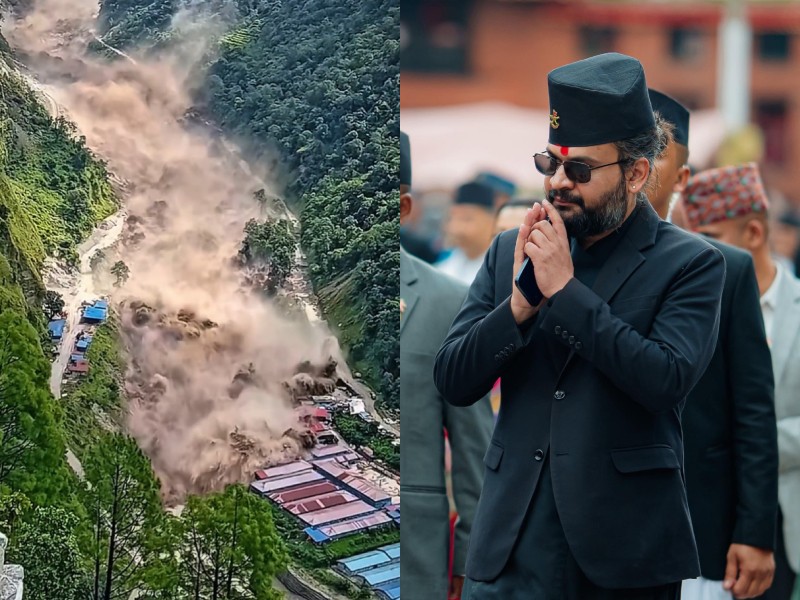
Nepal has chosen to manage the search-and-rescue operation following the devastating Bhote Koshi floods with its own security agencies, despite offers of help from India, China and several other countries.
The decision has attracted attention because hundreds of people remain missing, including foreign nationals travelling in Nepal.
Nepal Says It Can Handle The Rescue Operation
The government led by Prime Minister Balen Shah has said Nepal’s security agencies have the capacity to manage the rescue work.
Kathmandu has made a distinction between accepting humanitarian assistance and allowing foreign personnel to directly participate in search-and-rescue operations.
Instead of foreign rescue teams, Nepal is focusing on keeping the operation under a domestic chain of command.
Several Countries Offered Rescue Assistance
India, China, the United States, the United Kingdom, Japan, South Korea, Sri Lanka and Bangladesh were among the countries reported to have offered assistance.
Some countries offered helicopters and specialised disaster-response teams.
International organisations also approached Nepal with offers of operational support.
However, Kathmandu decided that foreign assistance should mainly come through relief supplies and financial contributions rather than foreign search-and-rescue personnel.
Hundreds Remain Missing After The Floods
The scale of the disaster has put Nepal’s emergency response system under major pressure.
According to the figures cited in the report, nearly 400 people have died, while more than 1,300 remain unaccounted for.
Foreign nationals are also among those missing, including Indians travelling to destinations such as Kailash Mansarovar and Gosainkunda.
At least 84 Indians have been rescued, while hundreds of others remain missing or uncontactable.
Nepal’s Experience During The 2015 Earthquake
One major reason behind Nepal’s current approach appears to be its experience during the devastating 2015 earthquake.
The 7.8-magnitude earthquake brought a huge international emergency response to Nepal.
Foreign rescue teams, military aircraft, medical personnel and relief organisations arrived from different countries.
While this increased Nepal’s emergency response capacity, it also created difficulties in managing large numbers of foreign teams and resources.
Why Nepal Wants One Rescue Command
During the 2015 earthquake response, coordinating foreign personnel, aircraft and movements became a major challenge.
Damaged airports, roads and communication systems made the situation even more difficult.
There were also challenges involving coordination between different foreign teams.
Nepal now appears keen to avoid similar complications by keeping the rescue operation under one domestic command.
A Nepalese foreign ministry official said the government had informed countries and organisations that its own security agencies were capable of handling the operation.
Foreign Aid Has Not Been Completely Rejected
Nepal’s decision does not mean it has refused all international assistance.
The country continues to accept relief materials and financial support through official channels.
India has provided humanitarian assistance under its Neighbourhood First Policy.
New Delhi initially sent 10 tonnes of relief material, followed by another 37.5 tonnes transported by military aircraft.
The supplies included temporary shelters, blankets, hygiene kits, solar lamps, medicines and food packets.
India Also Offered Bridge Support
The floods destroyed several bridges and damaged important infrastructure.
India has also offered Bailey and prefabricated truss bridges to help restore connectivity.
India had played a major role in Nepal during the 2015 earthquake through Operation Maitri, when Indian aircraft, helicopters and rescue teams helped with relief and evacuation operations.
This time, however, Nepal has chosen a different model for managing foreign assistance.
Nepal Creates A One-Door System
Kathmandu is also trying to centralise international assistance.
The government has asked its diplomatic missions abroad to seek financial support through the Prime Minister’s Relief Fund.
The aim is to create a “one-door mechanism” for foreign contributions.
This allows Nepal to coordinate incoming assistance and decide where resources are most urgently required.
The United States, United Kingdom and World Bank have also announced assistance, while the Asian Development Bank has offered wider support covering areas such as risk assessment, early-warning systems and resilient infrastructure.
Special Team For Missing Foreign Nationals
Nepal’s foreign ministry has created an Emergency Response Team to coordinate cases involving foreign nationals affected by the floods.
The team is responsible for gathering and verifying information and coordinating search, rescue and consular assistance.
Nepal’s Department of Tourism reported that 668 tourists from 34 countries had been out of contact since Wednesday.
India separately reported that at least 290 Indians were missing or uncontactable in Nepal.
India Says It Will Follow Nepal’s Requirements
India has continued providing relief while respecting Kathmandu’s position on the rescue operation.
India’s Ministry of External Affairs said its assistance would be based on Nepal’s requirements.
This means India can provide supplies and other support requested by Nepal while the country’s own agencies remain in charge of direct rescue operations.
Conclusion
Nepal’s decision to decline foreign search-and-rescue teams comes despite offers from India, China and several other countries.
The government says its own security agencies can manage the operation, while the experience of the 2015 earthquake appears to have influenced its preference for a single domestic command.
At the same time, Nepal continues to accept foreign relief supplies, financial assistance and other forms of humanitarian support.
With hundreds still missing, the country’s emergency teams face a difficult task as rescue operations continue.
FAQ
Why did Nepal decline foreign rescue teams?
Nepal said its own security agencies were capable of handling the rescue operation. Its experience with coordination difficulties during the 2015 earthquake also appears to have influenced the decision.
Which countries offered rescue assistance?
India, China, the United States, the United Kingdom, Japan, South Korea, Sri Lanka and Bangladesh were among the countries reported to have offered assistance.
Has Nepal rejected all foreign help?
No. Nepal continues to accept relief materials and financial assistance through official channels.
How many people are missing?
The report cited more than 1,300 people as unaccounted for, including foreign nationals.
How is India helping Nepal?
India has sent relief supplies, including temporary shelters, blankets, hygiene kits, solar lamps, medicines and food packets. It has also offered bridge support.