
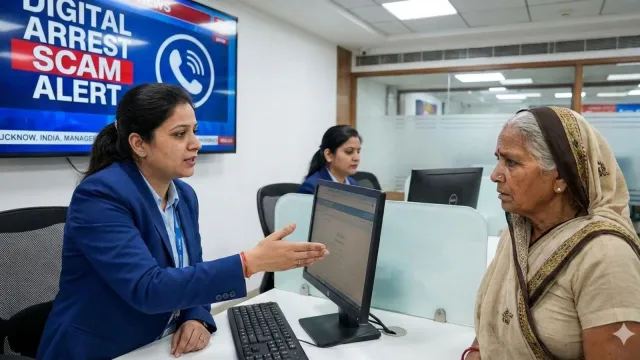
A phone call accusing someone of money laundering can frighten anyone, especially when the caller claims to represent law enforcement authorities. But what if the accusation is completely fake and the person on the other end is actually trying to steal your savings? A 66-year-old woman in Hong Kong reportedly lost nearly ₹3 crore after fraudsters convinced her that a bank account she had used for an online insurance payment was connected to suspicious financial activity. Believing that she was cooperating with an investigation, she transferred a huge amount of money into accounts provided by the callers.
The incident has once again highlighted the growing danger of impersonation scams, where criminals pretend to be police officers or investigators and use fear to convince people to transfer their money.
66-Year-Old Woman Loses Nearly ₹3 Crore In Phone Scam
According to reports, the woman lived in Sau Mau Ping, Hong Kong. She approached the police on October 31 after realising that she had been cheated.
The trouble reportedly began earlier in October when she received a phone call from a man who claimed that her bank account was linked to illegal financial transactions.
The caller allegedly told her that an account she had used to purchase insurance online was being investigated for suspected money laundering.
The accusation created fear and confusion. Instead of treating the call as suspicious, the woman reportedly believed the caller and followed the instructions given to her.
The fraudsters then convinced her to transfer money into bank accounts they provided, claiming that the transfers were required as part of the investigation.
She Transferred Money In Two Transactions
The woman reportedly transferred a total of HK$2.7 million, which was equivalent to nearly ₹3 crore.
The first transaction involved HK$2 million, approximately ₹2.4 crore. She later transferred another HK$700,000, taking the total amount to HK$2.7 million.
The callers allegedly made her believe that moving the money was necessary to deal with the investigation into the suspected financial activity.
However, after completing both transfers, she reportedly began to suspect that something was wrong.
She then approached the police and filed a complaint. Authorities registered the matter as a deception case. No arrests had been reported at the time of the news report.
How Did The Fraudsters Convince Her To Transfer Such A Huge Amount?
The reported incident follows a known fraud method in which criminals impersonate bank employees, police officers or government investigators.
They begin by making a serious accusation. A caller may claim that a person’s bank account, identity document, mobile number or online transaction has been connected to a criminal investigation.
The victim is then made to believe that the situation is urgent and that failing to cooperate could lead to serious consequences.
In some cases, fraudsters ask victims to transfer money into specific accounts, claiming that the funds need to be checked or verified.
This is where the trap works. The victim believes that following the instructions will help prove their innocence. In reality, the money is being transferred to accounts controlled by criminals.
The Hong Kong Anti-Deception Coordination Centre has previously warned about similar impersonation tactics and advised people to verify suspicious calls through official channels.
What Is A Digital Arrest Scam?
The incident also brings attention to a type of cybercrime commonly known as a digital arrest scam.
In this fraud, criminals pretend to be officials from agencies such as the police, the Central Bureau of Investigation or other government departments.
They may use fake identity cards, forged documents, official-looking backgrounds and video calls to make their claims appear genuine.
Victims are sometimes told that they cannot disconnect the call or speak to family members because the investigation is confidential.
The fraudsters may even threaten arrest or legal action to create panic.
They then demand money under different excuses, including account verification, security deposits or investigation procedures.
However, there is no legal process called a digital arrest in India. A genuine police officer or investigating agency will not conduct an investigation by forcing someone to transfer their savings into a private bank account.
Similar Digital Arrest Scams Have Also Been Reported In India
India has also witnessed several serious cases involving fraudsters posing as law enforcement officials.
In one reported case, a 70-year-old woman in Dehradun allegedly lost more than ₹3 crore after cybercriminals claimed that her phone number was linked to a major money-laundering investigation.
The fraudsters reportedly posed as CBI officers and threatened her with arrest. They convinced her to transfer money into accounts they provided.
Another case involved a 68-year-old woman in Mumbai who reportedly lost more than ₹3 crore after criminals impersonated police officers and other officials. The fraudsters allegedly staged a fake online court hearing to make their claims appear genuine.
These cases show how criminals use fear, authority and technology to target people, particularly those who may not be familiar with changing online fraud methods.
Why Are Senior Citizens Often Vulnerable To Such Scams?
Senior citizens can become targets because fraudsters believe that fear of police action, legal trouble and financial investigation may make them easier to pressure.
Many older people have spent years saving money through fixed deposits, pensions, insurance policies and other investments. A caller claiming that their savings are connected to a criminal case can create enormous anxiety.
Fraudsters may also use technical language and official-sounding terms to confuse victims.
However, it is important to remember that anyone can become a victim. Even educated professionals and financially experienced people can be tricked when criminals create a convincing story and apply pressure.
Families should regularly discuss common cyber fraud methods with elderly parents and relatives. A simple rule can make a major difference: never transfer money because of instructions received during an unexpected phone call.
How Can You Protect Yourself From Money Laundering Phone Scams?
Here are some important precautions everyone should follow:
1. Never Transfer Money To Verify Your Account
No genuine police investigation requires you to transfer your personal savings into an account provided by an unknown caller for verification.
2. Do Not Trust Caller Identification Alone
A phone number, display name, uniform or video background does not prove that the caller is a genuine government official.
3. Disconnect And Verify Independently
End the suspicious call and contact the concerned bank or government department using contact details from its official website.
4. Never Share Banking Information
Do not share OTPs, PINs, passwords, card details or internet banking credentials with anyone claiming to be an investigator.
5. Inform Your Family
If someone threatens you with arrest or legal action over the phone, discuss the call with a trusted family member before taking any action.
6. Report Financial Cyber Fraud Immediately
If money has already been transferred, contact your bank immediately and call India’s cyber fraud helpline 1930. You can also file a complaint through the official National Cyber Crime Reporting Portal at cybercrime.gov.in.
Quick reporting may help authorities and banks take steps to prevent the money from being moved further, although recovery is not guaranteed.
A Phone Call Should Never Decide The Fate Of Your Life Savings
The Hong Kong woman’s reported loss of nearly ₹3 crore is a reminder of how dangerous impersonation scams can become.
The fraudsters did not reportedly need to physically meet the victim. They allegedly used a phone call, a serious accusation and fear of legal action to convince her to transfer a massive amount of money.
For Indian families, the lesson is particularly important as digital payments and online banking become part of everyday life.