
Imagine climbing a mountain thousands of feet above sea level, surrounded by cold weather and difficult terrain, when your period suddenly begins. There are no sanitary pads available, no other women nearby to ask for help, and several days of the expedition still remain. This was the unexpected situation faced by Maharashtra mountaineer Yogeshwari Bohare during a mountain expedition at around 16,000 feet. With limited supplies, she found a temporary solution using tissue paper and medical tape. Her experience has sparked conversations about menstrual hygiene, women’s safety and the importance of preparation during outdoor adventures.
Who Is Yogeshwari Bohare, and What Happened During Her Expedition?
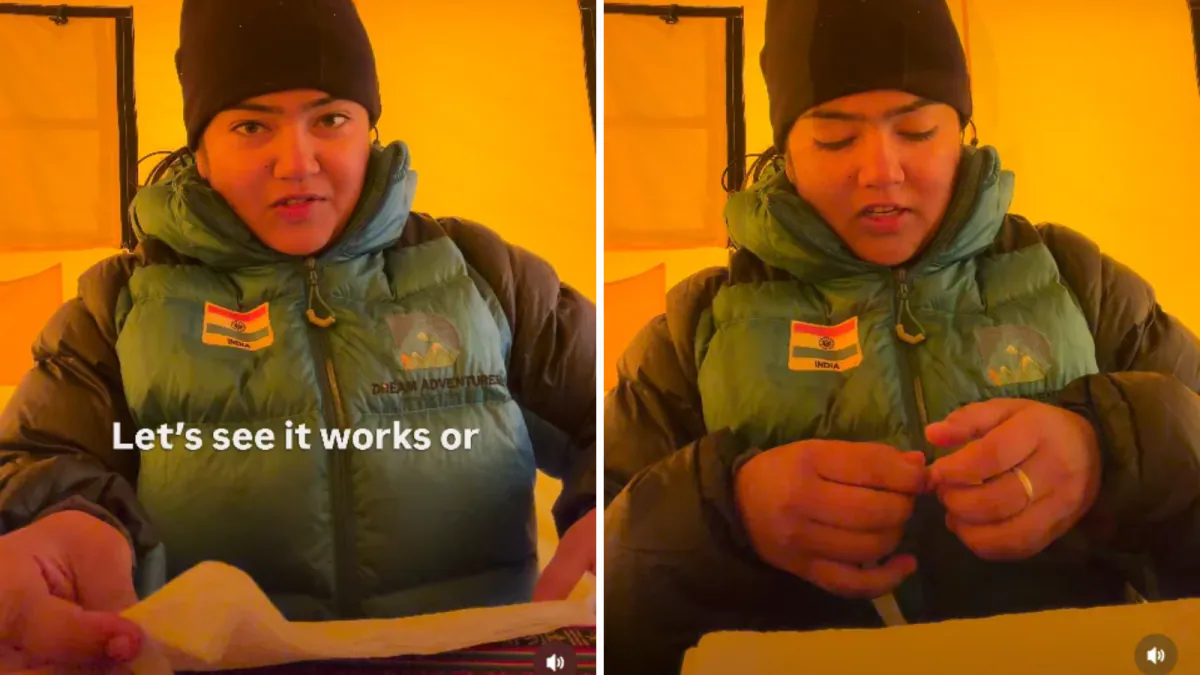
Yogeshwari Bohare, a mountaineer from Maharashtra, recently shared a video on Instagram describing how she managed her period while climbing at a high altitude.
View this post on Instagram
According to her account, her period started during the expedition, but she did not have sanitary pads with her. She was also the only woman in the group, leaving her without another woman nearby who might have been able to help her find menstrual products.
The situation became more challenging because the team still had around four to five days to spend in the area. Returning immediately or finding a shop was not a practical option in the remote mountain environment.
Instead of giving up, Bohare decided to use the materials she had available. She folded several layers of tissue paper to create a thicker temporary absorbent layer and used medical tape to hold the edges together.
She recorded the process and explained that she was trying to find a practical way to manage her period until she could access proper menstrual products.
Her video offered a glimpse into a challenge that many people rarely consider when planning a mountain expedition.
How Did She Make a Temporary Pad Without Sanitary Products?
In her Instagram video, Bohare explained that her period had started the previous night. With no sanitary pads available and several days remaining at the location, she decided to improvise.
She layered tissue paper to increase its thickness and used medical tape to help hold the material together. After preparing the makeshift pad, she showed it to the camera and expressed hope that it would work.
Her approach highlights the resourcefulness that can become necessary when people find themselves far from shops, medical facilities and other basic services.
However, it is important to understand that a tissue-paper arrangement is only an improvised emergency measure. It is not equivalent to a sanitary pad designed to absorb menstrual flow, and it may not provide reliable protection against leaks.
Tissue paper can become wet, tear apart or irritate the skin. Medical tape should not be placed directly on sensitive genital skin, and any improvised material should be changed promptly if it becomes damp or uncomfortable.
For women planning expeditions, carrying suitable menstrual products in advance remains the safer and more reliable option.
Why Managing Periods at 16,000 Feet Can Be Difficult
Menstruation can be challenging to manage even in familiar surroundings. At high altitudes, the situation may become more complicated because of the environment and limited access to facilities.
Mountaineers may spend hours walking across difficult terrain, stay in temporary camps and travel through areas where toilets, running water and waste-disposal facilities are unavailable.
Cold weather, bulky clothing and limited opportunities to wash hands can make changing menstrual products more difficult. Water supplies may also be restricted, making personal hygiene harder to maintain.
There is another practical concern: carrying used menstrual products back down the mountain. In many protected mountain areas, visitors must follow strict waste-management practices to prevent pollution.
These challenges show why menstrual hygiene should be included in expedition planning, just like food, water, warm clothing, first-aid supplies and navigation equipment.
Although menstruation itself does not automatically prevent someone from climbing, each person should consider their comfort, symptoms, physical condition and access to suitable supplies.
Yogeshwari Bohare Says Mountains Teach People to Adapt
Along with the video, Bohare shared a message about the lessons people learn while climbing mountains.
She explained that mountains teach more than climbing skills. They also teach people to adapt, survive and find solutions when unexpected situations arise.
Her experience reflects an important part of adventure travel: even carefully planned journeys can involve circumstances that cannot be predicted in advance.
A climber may prepare for changing weather, difficult routes and physical exhaustion but overlook something as ordinary as the start of a menstrual cycle.
Bohare’s experience shows why preparation needs to cover everyday personal needs as well as major safety concerns.
Her decision to speak openly about menstruation also helps bring attention to a subject that is still treated as uncomfortable or embarrassing in some communities.
Periods are a normal biological process. Discussing them openly can help people prepare better, support one another and reduce unnecessary shame.
Social Media Users Praise Her Resourcefulness
Bohare’s video attracted responses from viewers who praised her for finding a solution in a difficult situation.
Some people suggested carrying menstrual cups on future trips, while others recommended including period products in every adventure checklist.
Several viewers also appreciated her willingness to discuss menstruation publicly. Their reactions highlighted the importance of making outdoor activities more practical and comfortable for women.
The discussion also raised a broader question: are women adequately prepared for the everyday challenges they may encounter during adventure travel?
Menstrual products are often included in personal travel kits, but they can be forgotten when packing for physically demanding expeditions. This is particularly important when a trip involves remote camps, long trekking routes or several days without access to shops.
A little preparation can make a significant difference when an unexpected situation arises.
What Should Women Carry for Periods During Trekking and Mountaineering?
Women planning a trek or mountain expedition can reduce the chances of facing a similar problem by preparing a small menstrual hygiene kit.
Here are some useful items to consider:
- Sanitary pads or tampons: Carry enough for the expected duration of the trip, along with extra supplies in case the journey is extended.
- Menstrual cup or period underwear: These may be convenient options for some travellers, provided they are familiar with using them and can maintain the necessary hygiene.
- Unscented wipes or tissues: These can help when water is limited, although they should not replace handwashing whenever clean water and soap are available.
- Hand sanitiser: Useful when handwashing facilities are unavailable, particularly before and after changing menstrual products.
- Seal-able waste bags: Carry used products out when suitable disposal facilities are unavailable. Follow local mountain and campsite rules.
- Extra underwear: A spare pair can help manage leaks and improve comfort during long journeys.
It is also sensible to check the availability of toilets, water and waste-disposal facilities before starting an expedition. Travelling with a well-prepared group can make personal hygiene easier to manage.
Anyone considering a menstrual cup should practise using it before the trip rather than trying it for the first time in a remote environment.
Why Menstrual Hygiene Awareness Matters for Women Adventurers in India
India has seen growing interest in trekking, mountaineering, camping and other outdoor activities. More women are exploring adventure sports, travelling independently and taking part in physically demanding expeditions.
However, access to suitable toilets, clean water and menstrual products remains a practical concern in many remote locations.
Menstrual hygiene should not be treated as a private inconvenience that women must solve alone. Expedition organisers, trekking companies and adventure groups can help by encouraging participants to prepare personal hygiene kits, explaining waste-management rules and ensuring that emergency supplies are considered during planning.
Families and schools can also help by teaching young people that periods are normal and that planning for them is part of looking after one’s health.
Open conversations can make it easier for women to request help when necessary, without fear of embarrassment or judgement.
A Mountain Experience That Highlights the Importance of Preparation
Yogeshwari Bohare’s experience at 16,000 feet is a reminder that unexpected challenges can arise even during carefully planned adventures.
Faced with a lack of sanitary pads and no other women nearby, she used tissue paper and medical tape in an attempt to manage her period. Her resourcefulness drew attention to a practical issue that deserves more discussion among climbers and outdoor travellers.
At the same time, her experience highlights why emergency improvisation should not replace proper preparation. Carrying menstrual products, maintaining hygiene and planning for waste disposal are important parts of a safe expedition.
The larger lesson is simple: adventure is not only about reaching a summit. It is also about preparing for real-life challenges, adapting responsibly and ensuring that basic needs are not overlooked.